Long-Term Residence Permit EU in Poland
Complete Guide
If you are planning to settle in Poland for the long run, the long-term residence permit EU route is one of the most important legal options to understand. In Poland, this permit is granted for an indefinite period, while the residence card connected to it is valid for 5 years and must later be replaced.

The EU long-term resident permit in Poland is granted for an indefinite period, but the connected karta pobytu is issued for 5 years and later has to be replaced.
The key practical protection in the filing stage is the passport stamp. If you file on time during lawful stay and correct formal defects on time, the office may treat your stay as lawful in Poland while the case is pending.
Permanent Residence and the EU Long-Term Route Are Not the Same
Although people often confuse permanent residence with the EU long-term route, they are not identical. In Polish practice, the EU long-term resident permit is an EU residence permit for third-country nationals who have built up long legal residence in Poland, usually for economic, family, or broader settlement reasons. It leads to a karta pobytu and gives a stable legal basis for life in Poland, but it is separate from other paths to permanent residence status, such as permits linked to Polish origin, marriage to a Polish citizen, or the Pole’s Card.
This distinction matters in practice because the office examines the exact legal basis behind your stay history, not only the fact that you have been in Poland for a long time. A person may have strong settlement ties but still need to verify whether the residence route being counted is the correct one for the EU long-term resident path.
Stable long-term status
Once granted, the permit itself is indefinite. The 5-year period applies only to the physical residence card, not to the legal status behind it.
The Five-Year Residence Requirement, Cumulation of Residence Periods, and Uninterrupted Stay
The key starting point is the five-year residence requirement. To qualify, the applicant should have lived in Poland for at least 5 years legally and with uninterrupted stay before applying. The rules also allow the cumulation of residence periods, but not every period counts in the same way.
In practice, full periods under visa-free stay, most visas, temporary residence, temporary residence and work, and EU Blue Card residence can be counted, while time spent in Poland for studies or vocational training is counted only in half. This is one of the most common points applicants misunderstand when they estimate their own eligibility.
What usually counts in full
Periods based on visa-free stay, most visas, temporary residence, temporary residence and work, and EU Blue Card residence are typically the strongest parts of the residence-history calculation for this route.
What is counted only in part
Study-related or vocational-training-related periods are usually counted only in half. This is why many people who studied in Poland need a longer total timeline before they can qualify for the EU long-term resident permit.
Uninterrupted stay is not absolute
Short trips abroad do not automatically destroy eligibility. In general, absences may be up to 6 months at one time and up to 10 months in total during the qualifying period, with broader limits in some Blue Card cases. This is why declarations on time spent outside Poland are often important in the file.

EU Residence Permit Application, Documents for Application, and Legal Stay Confirmation
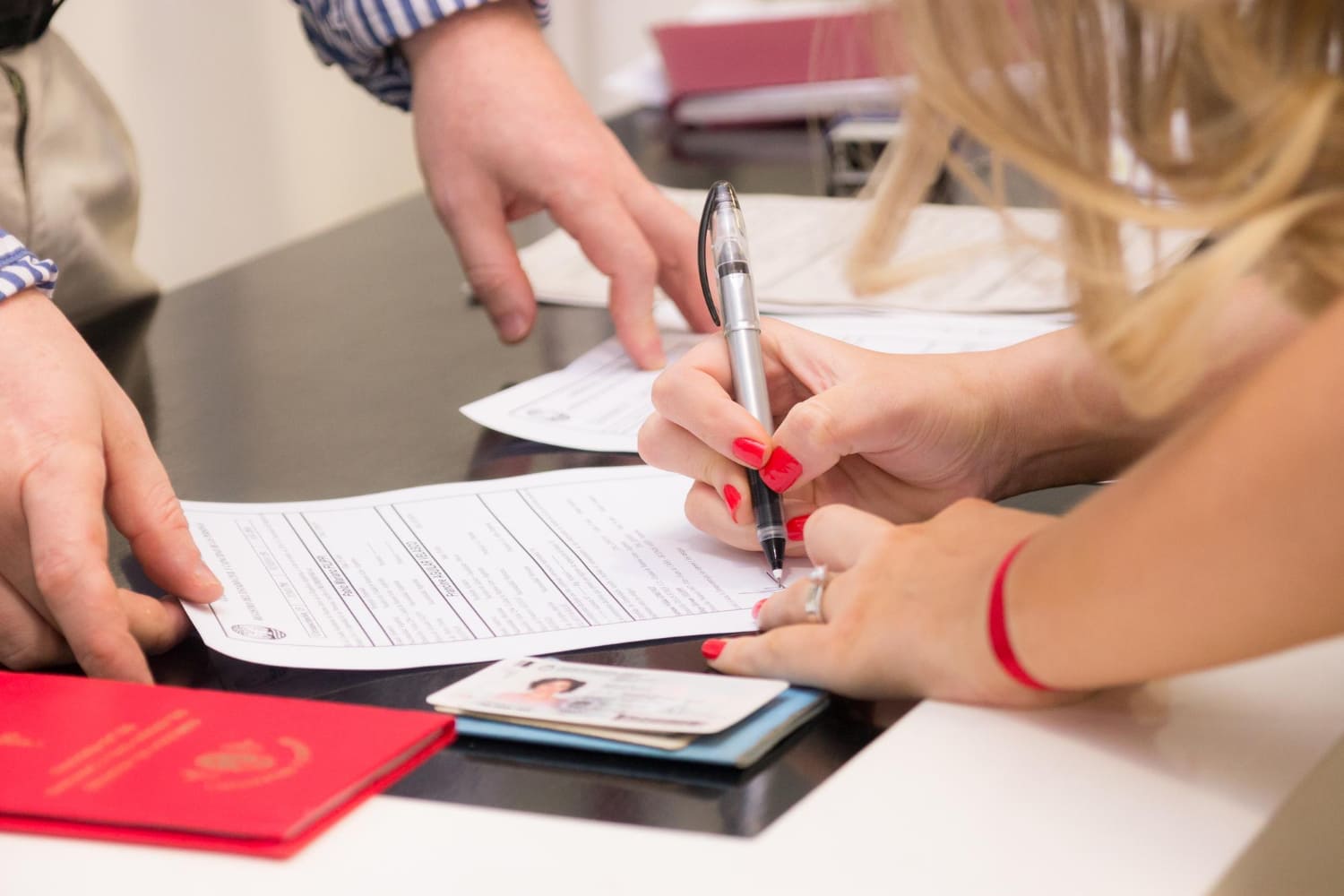
The EU residence permit application should generally be filed in person at the voivodeship office responsible for your place of stay. In practical terms, the application submission process begins locally, not through a consulate abroad. The file should be lodged no later than the last day of lawful stay in Poland.
The documents for application are extensive, and the office will look not only at the form itself but also at whether the whole file proves that you meet the legal conditions. Typical documents for application include the completed form, 4 recent biometric photographs, a copy of a valid passport, and documents that show where you live in Poland. The original passport should normally be available for inspection.
- Completed application form
- 4 recent biometric photographs
- Copy of a valid passport and original for inspection
- Documents proving accommodation in Poland
- Confirmation of income sources
- Proof of Polish language knowledge at B1 level or an accepted equivalent
- Health-insurance-related records where required by the office
- Sometimes a declaration on absences and a declaration of dependents
Another crucial issue is legal stay confirmation. If you submit the application during your lawful stay, correct formal defects on time, and meet the filing rules, the competent province governor can place a stamp in your passport. That stamp works as legal stay confirmation in Poland while the case is being examined, although it does not authorize travel to other Schengen states.
Income Threshold, Fees for Residence Permit, Fingerprints, and Timing
The financial threshold is one of the areas where applicants should be very precise. In current regional official guidance, the minimum monthly net amount is indicated as PLN 776 for a person living alone and PLN 600 per person in a family. This is why confirmation of income sources and the declaration of dependents are often examined together.
The current fees for residence permit for granting an EU long-term resident permit are PLN 640, and the fee for issuing the residence card is PLN 100. Fingerprints are also part of the process for the residence card in the usual age-based situations, so the procedure is not only about mailing papers. It also includes personal appearance and biometric steps.
The decision on a permanent residence permit or an EU long-term resident permit should be issued within 6 months, counted from the point when the last key requirement is fulfilled, such as personal appearance, formal completeness, and submission of the necessary supporting documents. If the result is negative, an appeal is generally available within 14 days.
Permanent Residence Document, Residence Card Issuance Process, and Karta Pobytu
The permanent residence document connected with this status is the residence card, commonly called karta pobytu. The permit itself is indefinite, but the karta pobytu is valid for 5 years. This distinction is important because many people assume the permit itself expires after 5 years, which is not true.
The residence card issuance process comes after the permit is granted. In practical terms, this is the stage that turns the granted status into a physical biometric document that you can use for identity and border-crossing purposes. Because this is a biometric residence document, the residence card issuance process should not be treated as a minor administrative afterthought.
Residence in Schengen area travel
A Polish residence card generally allows travel within the Schengen Area for up to 90 days in any 180-day period for tourism or similar short purposes, as long as you carry a valid passport and the valid card.
Travel mobility is not EU-wide work access
This kind of residence in Schengen area mobility does not mean an automatic right to work in another EU country. It is travel mobility, not automatic labour-market access across the European Union.
Withdrawal of Residence Permit, Translations, and Document Authentication
You should also know the rules on withdrawal of residence permit. Even though the permit is indefinite, it is not untouchable. Withdrawal may happen, for example, if the status was obtained unlawfully, if the person becomes a serious threat to public order or state security, or if the person leaves Poland or the European Union for too long under the relevant legal rules.
Finally, pay close attention to document form. If your documents for application are in a foreign language, they should usually be submitted with a Polish translation prepared or certified by a sworn translator. If your home-country public documents are intended to be used in Poland, apostille or legalization may also be relevant depending on the country of issue.
Document strategy matters
Translation and document authentication should be checked before the application submission process starts. This often prevents delays that have nothing to do with your actual residence history, income, or language eligibility.
Why This Route Matters for Long-Term Settlement in Poland
The EU long-term resident permit is one of the strongest long-term stay routes for third-country nationals who have already built a real life in Poland. It is especially relevant for applicants whose residence history combines work, family life, Blue Card status, or other long legal periods that can be counted properly toward the 5-year requirement.
In practice, the strongest cases are usually the ones where the applicant checks residence history carefully, counts absences correctly, prepares language proof in advance, and treats the application submission process as a structured legal file rather than as a simple form submission.


FAQ
What counts as uninterrupted stay for this EU residence permit?
For the long-term EU resident route, uninterrupted stay generally allows absences of up to 6 months at one time and up to 10 months in total during the 5-year qualifying period, with special rules for some Blue Card cases. The office also looks carefully at which residence periods can be counted in full and which can only be counted in part.
Is this EU residence permit the same as ordinary permanent residence?
No. Both give a strong long-term status, but the long-term EU resident permit is a distinct legal category. It is indefinite and leads to a 5-year karta pobytu, but it is not the same route as every Polish permanent residence status case.
How does the application submission process work if I am close to the end of my current visa or card?
You should file in person at the competent voivodeship office no later than the last day of lawful stay. If the application is timely and formally correct, the passport stamp can serve as legal stay confirmation in Poland until the decision becomes final.
What are the most important documents for application?
The core documents for application usually include the completed form, 4 biometric photographs, a valid passport copy, proof of accommodation, confirmation of income sources, language proof, and often health insurance. Depending on the office, you may also need a declaration on absences and a declaration of dependents.
Can my karta pobytu be used for residence in Schengen area travel?
Yes, but only in the short-stay sense. A Polish residence card generally allows travel in the Schengen Area for up to 90 days in any 180-day period for tourism or similar short purposes. It does not automatically authorize employment in another EU country.
What can I do after a refusal — is there a negative decision appeal?
Yes. A negative decision appeal is available. The appeal is normally filed in writing within 14 days through the voivode to the Head of the Office for Foreigners. If the second-instance decision is also negative and you have no other stay basis, the obligation to leave Poland can follow.
Similar posts
Continue with related topics on long-term stay, residence cards, sett