
Permanent Residence Permit in Poland
Routes, documents, residence card, and next steps
If you want to settle in Poland for the long term, a permanent residence permit is one of the strongest settlement titles available to a third-country national. It is granted for an indefinite period, but only if your case fits a specific legal route. The card you later receive is only the document confirming that status, not the status itself.

The permanent residence permit is granted for an indefinite period. The residence card issued after approval is valid for 10 years — it is the document confirming the status, not the status itself.
This permit is available only where the law gives a clear legal basis. The route you qualify for determines which documents you need and how the voivodeship office will assess your case.
Residence Card
The residence card confirms that a foreigner has a residence title in Poland. After a positive decision, the residence card is issued automatically, and for this status it is valid for 10 years. Many people also say karta pobytu, but in legal terms the permit and the card are not exactly the same thing.
Before issuance, fingerprints collection is required for most applicants aged 6 or older, unless giving fingerprints is physically impossible. Once the document is ready, you collect it from the voivodeship office that handled the case.
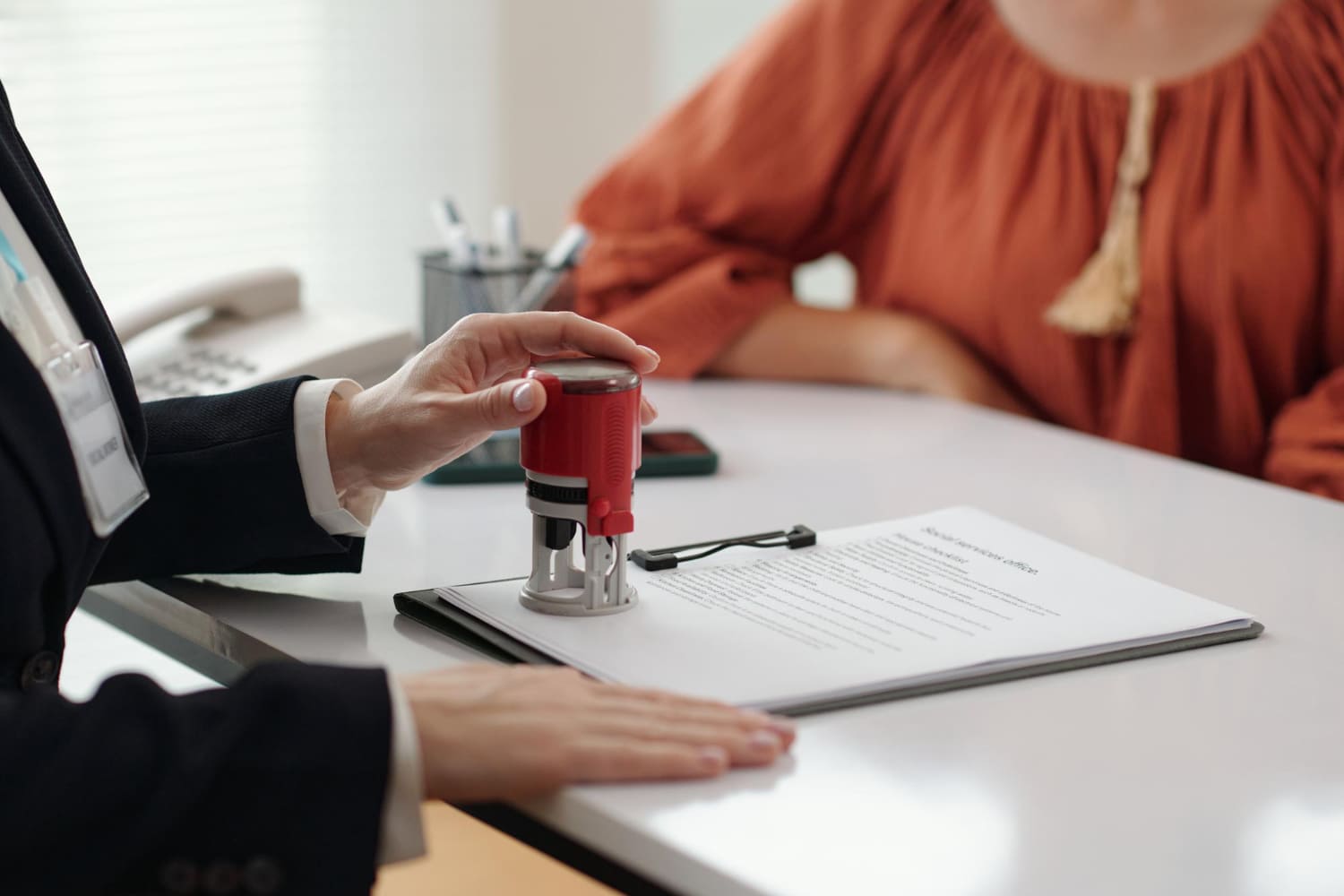

Permanent Residence Permit — main routes
A permanent residence permit is available only where the law gives a clear legal basis. In practice, the main categories include Polish origin, a valid Pole’s Card, marriage to a Polish citizen, asylum, refugee status, subsidiary protection, humanitarian reasons, or a tolerated stay permit. Depending on the route, the office may also check your continuous stay or uninterrupted stay in Poland.
The legal basis determines which documents you need and how the office will assess your case. A person applying because of Polish origin will usually need documents confirming Polish origin. A person filing because of marriage must prove that the family route is complete. A person relying on protection grounds will be assessed through the specific rules for their category.
Polish origin & Pole’s Card
Documents confirming Polish origin may come from state, church, or former Soviet authorities and may concern a parent, grandparent, or two great-grandparents. A valid Pole’s Card opens a separate route with its own checklist.
Marriage to a Polish citizen
Requires at least 3 years of marriage and 2 years of residence in Poland immediately before filing on a temporary permit granted on that basis. A marriage certificate with certified Polish translation is central to the file.
Protection grounds
Covers asylum, refugee status, subsidiary protection, humanitarian reasons, and tolerated stay permit. Each category is assessed through its own specific rules at the voivodeship office.
Polish origin and Pole’s Card — what to prepare
For Polish-origin cases, documents confirming Polish origin are often the heart of the file. Official guidance explains that such documents may come from state authorities, church authorities, or former Soviet authorities, and may concern a parent, grandparent, or two great-grandparents. In practice, they can include old identity papers, civil-status records, church records, military records, or deportation records. If you attach a birth certificate issued abroad, it should normally be translated by a sworn translator, and some foreign public documents may also need legalisation or apostille.
A valid Pole’s Card can open another important route. In that category, the file usually includes the Pole’s Card itself and documents showing that you intend to settle in Poland permanently. Official regional guidance also points to confirmation of tax obligations and proof of no criminal record in Poland as practical requirements. Because of that, the Pole’s Card path can look simple at first glance but still requires careful preparation.


Holders of a valid Pole’s Card are often exempt from the standard stamp duty of PLN 640. Always confirm with your specific voivodeship office before submission.
Apply for permanent residency and temporary residence permit
Many applicants first hold a temporary residence permit and only later move to a settlement route. This is particularly common in marriage cases. That is why anyone planning to apply for permanent residency should first check whether they already meet the statutory conditions or whether a temporary residence permit is still the correct step.
It is also important not to confuse this status with the EU long-term resident permit. In the EU long-term route, stable and regular income is a core requirement. In a permanent residence permit case, the key issue is usually the route itself rather than one universal income test. This distinction helps applicants prepare the right documents from the start.
Form, documents, provincial office
The application submission should be made to the voivodeship office competent for your place of stay. In most cases, the foreigner applies in person. The voivodeship office checks identity, the legal route, and the supporting documents, and it may ask for originals or certified copies with sworn translations.
A standard file usually contains the form, photographs, a valid travel document, and route-specific evidence. Depending on your case, that may include a birth certificate, a marriage certificate, documents confirming Polish origin, a valid Pole’s Card, or records linked to refugee status, subsidiary protection, humanitarian reasons, or a tolerated stay permit. In the Pole’s Card route, confirmation of tax obligations may also appear in the checklist.
- Completed application form
- Valid passport or travel document with copies of all pages
- Recent photographs meeting current specifications
- Proof of stamp duty payment — PLN 640 (some categories exempt)
- Route-specific evidence: birth certificate, marriage certificate, documents confirming Polish origin, Pole’s Card, or protection records
- Sworn Polish translation of all foreign-language documents
- Legalisation or apostille for foreign public documents where required
- Confirmation of tax obligations (Pole’s Card route)
- Proof of no criminal record in Poland (Pole’s Card route)


Legal stay, continuous stay, and timing
If the file is submitted during your legal residence in Poland and formal defects are corrected on time, your legal stay continues until the final decision becomes final. The voivodeship office places a stamp in your passport to confirm filing, but that stamp does not let you travel freely in the Schengen Area and does not guarantee re-entry after departure.
For several routes, continuous stay and uninterrupted stay matter as legal tests, not as vague descriptions. Official regional guidance explains that interrupted periods abroad are usually limited to 6 months at one time and 10 months in total during the relevant period, subject to statutory exceptions. If your route depends on marriage or protection history, keeping track of travel dates is essential.
The voivodeship office passport stamp confirming timely submission does not allow free Schengen travel and does not guarantee re-entry into Poland after departure. Check your travel rights carefully before any trip abroad during the waiting period.
Negative decision, appeal procedure, administrative court
A negative decision does not always end the matter. If you receive a negative decision, you can usually start the appeal procedure by filing an appeal to the Head of the Office for Foreigners through the authority that issued the first decision. The general deadline is 14 days from service of the decision. Proceedings on granting a permanent residence permit are expected to be concluded within 6 months, while appeal proceedings are to be concluded within 90 days.
If the second-instance authority also refuses the case, a complaint to the administrative court may be possible. That stage is separate from the appeal procedure itself. A complaint to the administrative court does not by itself legalise a person’s stay in Poland, so deadlines must be watched very carefully. A final negative decision in a residence case can trigger the duty to leave Poland within the statutory period — every refusal should be reviewed quickly and strategically.
The appeal deadline is 14 days from service of the negative decision. Missing this deadline may close all further administrative remedies. Act immediately and consider consulting an immigration lawyer.
Polish Citizenship — next step
For many people, this status is not the final destination but a step before Polish citizenship. Some routes, especially Polish origin and the route connected to a Pole’s Card, are often part of a longer plan that later includes Polish citizenship, but the nationality procedure has its own separate rules and requirements.
Settlement status and Polish citizenship are separate legal concepts with different rights and different procedures. Holding a permanent residence permit does not automatically lead to citizenship — a separate application is always required.
FAQ
What are the main requirements to obtain a permanent residence permit?
The answer depends on the legal basis. Common paths include Polish origin, a valid Pole’s Card, marriage to a Polish citizen, asylum, refugee status, subsidiary protection, humanitarian reasons, or a tolerated stay permit.
Can I collect my residence card after a positive decision?
Yes. After approval, the residence card is issued by the office and you collect it when it is ready. Fingerprints collection is required before issuance for most applicants aged 6 or older.
Do I always need a temporary residence permit before applying for permanent residency?
No. In some routes you may move directly into settlement status, but in marriage cases a temporary residence permit is often the earlier stage. Check your specific route before filing.
Is Polish permanent residence the same as Polish citizenship?
No. Settlement status and Polish citizenship are separate legal concepts with different rights and different procedures. Holding a permanent residence permit does not automatically lead to citizenship.
What happens if my permanent residence permit case gets a refusal?
You should check the reasons immediately, consider the appeal procedure within 14 days, and where relevant ask whether a later compl